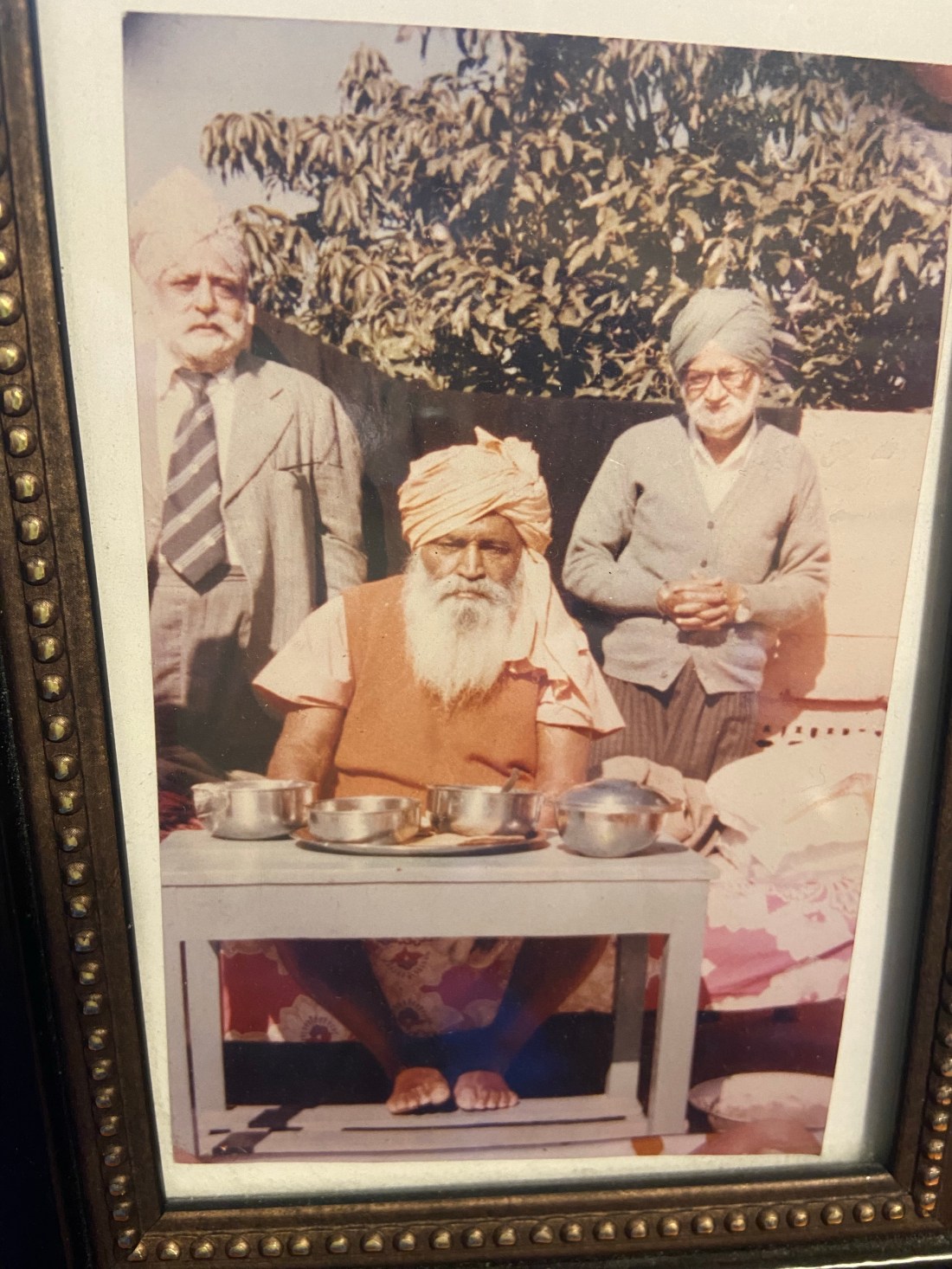
We can not attain realization of the Self by our mind unaided by Gut’s Grace: Maharishi Ramana.
Grace
Subscribe to continue reading
Subscribe to get access to the rest of this post and other subscriber-only content.
Knowledge
Can there be knowledge without ignorance?
Can ignorance exists without knowledge?
Searching the source of the individual, to whom they pertain
and abiding there is true knowledge: Maharishi Ramana.
Comment: if we inquire about this, the mind will emerge in the self. As Maharishi used to say, ‘I’ thought is the mother thought of other thoughts. When we inquire like this, our thoughts will emerge in the true self or Atmanam( Soul). Then, a new dimension of bliss will appear. It can be done by repeating this method, which is ‘Self-inquiry,’ according to M.R. Teaching.
Does God Exist ?
God exists. He is so evident that it requires no testimony to prove him. No proof can strengthen his being,nor can any refutation weaken him it. Things other than him can be proved or disproved but not he.
God abides in usas our true self. Self is self-evident .Does the existence of one’s own self need any proof? The most immediate feeling of every one : “I am” is not illusion but a real,intuitive experience . On the other hand if one were to say unto oneself :” I am not”,one would be denying what is only real and true.If a person were to force this position upon himself ,he would not a normal individual because his experience would not be empirically valid. A living individual can not think that he is not live in other words,one can not experience one’s non- existence or one’s unawareness…continue
Meditation.
The result of Self-inquiry is the cure for all sorrows. It is highest of all results. Self-inquiry itself is more meritorious and purifying; Maharishi Ramana.
Ego
The ego-self appears, disappears, and is transitory, whereas the authentic self is permanent. You are the true self, and you identify it as the ego self; Ramana Maharishi.
Comments: You are already the self but think you are the body and mind, which is illusory. Vedanta declares this with great clarity. This is the supreme knowledge found in the Upanishads.
Vadanta
Vedanta is the spiritual truth, where there is no place for rituals or studying holy books. There are so many books about this subject, such as Upanishads, but these books help us gain supreme knowledge, and as students, we should study such books. But this knowledge is merely for our understanding of intellectual knowledge or only memory. Real knowledge is behind intelligence.
At the time of clouds, we can not see the blue sky. But when there are no clouds, we can see the Blue sky. Likewise, we can not take the experience of Bliss when thoughts are in our minds. But by Observing the mind, we can understand or experience ourselves. Language can not describe it. That is why Upanishads said? Nati, meaning we describe this as our best but can’t describe it because it is a matter of meditation, not of languages.
The Bhagavad Gita.
Chapter 2, Solaka 58.
As a tortoise draws his limbs (into the shell) likewise, a yogi draws his senses from worldly objects or the objects of the senses from every side. This is the art of meditation, when we draw the mind inside by using any method such as observation,nam Japa,observing our breath Vipassana. now what we are doing ? we are trying to withdraw our senses from outside (worldly objects) that is called (Antarmukha); then by practicing these methods we can find that eternal bliss or eternal peace in our hearts. which language never can describe. it is our destination.
Second question of Raman Gita:
Is the study of scriptures enough by itself to liberate those desirous of knowledge, or is spiritual practice according to the master’s injunction also necessary?
Answer by Maharishi Ramana:
The seeker of knowledge is not achieved by a study of the scriptures. Without upasana, there can not be attainment for him: this is firm.
Experiencing the natural state, during spiritual practice, is called upassana, and when that state becomes firm and permanent, that itself is called jnana.
When discarding senses objects, one abides in one’s own self or true nature as a flame of juana. This state of being is termed sahaja sthiti.
Sri Ramana Gita
This book contains some questions and answers asked by Ganapathi Muni, as his follower. He wrote in Sanskrit, it is translation of that version.
I bow to Maharishi Ramana, son of Siva in human form, and set forth his teachings in lucid work.On the 29th cold December of 1913, in the Christian era, all the disciples were seated around with attentive minds. I asked Bhagavan Ramana for definite answers.
First question: Is mukti ( liberation ) to be had by mere discrimination between the real and unreal or other means for ending bondage?
Answer: Abidance in the self alone releases one from all bonds. Discrimination between the real and unreal leads to non-attachment.
The jnani is unfathomable: he always abides alone in the Self. He doesn’t consider the universe as unreal or different from him.