Even the mind and world rise and set together; it is the mind that lights the world.
The source from which the world and mind arise and into which they set is reality, which does not rise or subside, Maharishi Ramana.
Even the mind and world rise and set together; it is the mind that lights the world.
The source from which the world and mind arise and into which they set is reality, which does not rise or subside, Maharishi Ramana.
Total problem for meditation is that we doesn’t do observation of the whole. We only observe a part. For example I am angry and I want to control my anger. I star to observe my mind. anger is a part of the whole. Then it becomes a problem due to gape between me and anger. But If I am doing observation the whole of mind then there will be no anger. This is the truth which has to be understand. You are observing whole mind or you are observing only one part.
Note: these ideas I have read from a J. Krishnamurti book.
By Maharishi Ramana Prayer
Can there be the feeling of ‘I’ without that which exists ,always?
free from thoughts ,it exists ,this inner being, the heart.
How then to know which is beyond mind?
To know it is to abide firmly, in the heart.
Grace is there all along. Grace is the Self. It is not something to be acquired. All that is necessary is to know its existence. In the same way, the Sun is pure brightness. There is sunlight, and you are surrounded by it: still, if you want to know the Sun, you must turn your eyes toward it and look at it. Similarly, Grace is only to be found by effort. Although it is here and now: Maharishi Ramana.
The idea of the body is a thought. Mind is only a thought. Mind starts with ‘I am’-this is the mother thought. If one observes ‘I thought,‘ then the other thoughts will disappear. Then there will be no body, nor mind, nor ego.
How then to know that which is beyond the mind? To know it is to abide, firmly, in the heart.; Maharishi Ramana.
The ‘I’ thought is the first to die for those who have taken refuge, out of fear of death, at the of feet of the conqueror of death. Therefore, they are naturally immortal. Can they ever again be assailed by the fear of death? ; Maharishi Ramana.
My comments: when we do self- inquiry our thoughts start to minimise. The more we do the more our minds become silent. In the last, we find ‘I’ thought is the mother thought of all thoughts. It is the source of the mind. When ‘I ‘ thought is observed. Then only bliss remains. This is death the death of mind. Then one finds self – realization and you death less spirit.
In the saddhna of observation, when the limited ego ( Ahem) meaning I-ness)traced or observed. And one repeats this process then it leaves its existence and like a bird whose wings had been cut this ego vanishes. Then a new pure ahem comes as a Dawn of eternal peace; Maharishi Ramana.
Comments: This is Self-realisation.
These days, what am I doing?I am doing the practice of Maharishi Ramana, these words.” In the practice of vissas( object ), when limited Ahem( ego), which is the root of the thoughts traced. Over and over again, which means not giving the thoughts to wander. We forcibly not going them to go out of the self. By repetition, this is the mind that dictates to us, like a bird whose wings have been cut, it falls. and another experience of bliss appears that we call Self-realisation or God-realisation.
What is meditation? There is no place where you can meditate! Today I was sitting in my car, my wife went to the market, and I started to ‘observe‘ my mind. As worldly thoughts began to fade, a new experience of bliss emerged. This is the whole teaching of Maharishi Ramana, which I have been doing for forty years. I will want to share a story of my life. One time, my wife and I were travelling from Chicago to Caligri. The plane flew from Chicago I started observing my thoughts. It was a blissful state, and I came out of this experience when the plane touched down at the airport of Caligri.
When we look upon our thoughts, which are seen (mind), they start to vanish. Like a bird whose wings have been cut, it will fall. Likewise, our mind has no existence when we look at the mind.; Maharishi Ramana ( Sat-darshan, true vision).
When we trace or watch the origin of the thought. Over and over again, worldly objects or thoughts start to disappear, and, like a bird whose wings have been removed, our minds fall down, and the result will be self-realisation.
What is real meditation? I want to explain this art! I am doing it from three to four hours and I used to spend four to five hours daily.it is my routine from 1986. You can sit when your mind is at rest close your eyes and observe your mind silently. Do not force just observe. Be aware inside and outside what is happening inside and outside, do not think about anything. What is happening just look at it? And you will be astonished that thoughts will start to leave their existence and you will feel more and more eternal peace or blissful state. Your tensions will be no more.And this thread of peace will follow in the day while doing your work also.
The scriptures assert,” That you are, “ without enquiring and reaching the self, which always shines and is abiding as that. To discuss again and again endlessly is only due to the weakness of the mind: Maharishi Ramana.
Comments: As I have been practising for so many years, Self-inquiry or observation of the mind is the only way to get liberation. Nobody can achieve liberation by reading so many scriptures or memorising them. You will think that I have understood, but it will be only an illusion. As my suggestion, you have to give more time to watching the mind.
All vadas have declared that Self-realisation is not a topic of language. It can be realised only when there are no thoughts. So it is a matter of constant observation. Swami Amarjit.
February 24, 1936.
An American Dr Henry hand questioned “What is ego’?.
Answer: ego is inside, not outside, you have to clear it for yourself.
What is its definition?
Answer by Maharishi: The definition of ego will be not separate from ego.
Q: what is the ‘ Self’ (soul)?
A: Search for‘ego’ you will find the Soul.
Q: Then both are one?
M: self ( ataman) can stay without‘ego’ , but ego’ cannot stay without the self.
Devotee: now it’s clear.
An other American questioned about’ Thoughts,
Maharishi: If you search for, the origin of thought which is’I’ then thoughts will disappear and a new dimension will be appear witch is the Self in the form of ‘ bliss’
The body is insentient , the self doesn’t rise. Within the body’s limit ,an ‘I’ rises, between the body and self. It’s named ‘ ego’ knot of matter and spirit, ‘bondage’ ( Subtle body) and mind: Maharishi Ramana.
What is the mind? If you search for it, there would be no separate entity as the mind.
The mind is only a bundle of thoughts. They are dependent on ‘I’ thought. Know ‘I’ thought to be mind.: Maharishi Ramana.
One’s ignorance of the Self-revealing immediacy of the divine: Grace is no proof of the contrary. If the owl doesn’t see the sun that illuminates he whole world, is it the fault of the Sun? Is it not due to the effectiveness of the bird’s sight? : Maharishi Ramana.
We can not attain Self-realisation of the Self by our mind unaided by God’s grace: Maharishi Ramana.
Grace is there all along. Grace is the Self. It is not something to be acquired. All that is necessary is to know its existence. In the same way, the sun is pure brightness. It is there and shines, and you are surrounded by sunlight; still, you want to know the sun, you must turn your eyes in its direction and look at it. Similarly, Grace is only to be found by effort. However, it is here and now: Maharishi Ramana.
The repose of being poised in one’s true nature, devoid of thoughts, is the highest devotion. It comes from the strength of meditation, Maharishi Ramana.
Success is turning the mind inward is achieved by practice and dispassion and it succeeds only gradually; Maharishi Ramana.
Even though the mind and the world rise and set together, it is the mind that lights the world.
The source from which the world and the mind rise and into whichich they set is the reality, which does not rise or subside.
Maharishi Ramana.
Comment: When our mind goes outside the meaning of worldly objects, we feel pleasure and pain. But when it goes inward, it emerges into reality. This stage is of Samadhi.
On the rising of the ‘ego’, everything rises with its subsidence al subside. The ‘ego’ therefore all. Tracking it is the way to victory over everything. —Maharishi Ramana.
Man is trying all the time to become non-violent. So there is a conflict between ‘what is’ which is violence, and what ‘should be ‘which is non-violence. there is a conflict between the two. That is the very essence of the wastage of energy. As long as there is a duality between ‘what is’ and ‘what should be ‘ that is the wastage of energy. -Man is trying to become something else, making an effort to achieve what ‘should be ‘ that conflict is wastage of energy.
Why should I have the opposite at all, as non-violence as the ideal? The ideal is not real, it has no meaning, it only leads to various forms of hypocrisy: being violent and pretending not to be violent. Or if you say you are an idealist and will eventually become peaceful. It is a great pretence, an excuse because it will take many years for you to be without violence. Indeed it may never happen. In the meantime, you are a hypocrite and still violent. So if we can not in abstraction but actually, put aside completely all ideals and only deal with the fact — which is violence – then there is no wastage of energy.this is very important to understand: J. Krishnamurti.
Meditation is not any different thing to achieve it. It is your real being. We live in conflict because we never touch it. Without knowing ourselves what is the use of knowing other knowledge? Your self is like a Dawn in darkness. It is eternal peace.
How you will able to find this? ‘ be aware of your thoughts, feelings. What is important to be aware of your activities of mind and outside?
Sometimes sit-in comfort pose. Be aware of your mind and you will find the burden of your mind will be removed.
And you can do it while you are doing your work. The same line of peace will continue in your actions: Swami Amarjit.
( I am sharing my own experience )
The body, the senses, the vital force, and ignorance are all insentient. They are not the consequences which ‘I am’: Maharishi Ramana.
All religions begin with the existence of the individual, the world and God.
So long as the ego lasts, these three will remain separate.
To abide, egoless, in the self, is the best; Maharishi Ramana.
Because we see the variegated world, the single source, with unlimited power, has to be accepted. The seer, the seen, the screen on which it is projected, and the light are all only he. The one: Maharishi Ramana.
So long as one thinks he has a form the world and God too have forms
When one is the formless self,? Who is there to see?
It is itself the eye, complete, limitless: Maharishi Ramana.
All religions begin with the existence of the individual,? The world and God. So long as the ego lasts these three will remain separate
To abide, egoless, in the self, is the best: Maharishi Ramana.
Verse 15
Is there any action left for the exalted yogi abiding steadily in the self ( natural state ), having destroyed the mind?M.R.
The ‘I’ thought is the first to die for those who have taken refuge, out of fear of death, at the feet of the conquering of death. Therefore they are naturally immortal. Can they ever again be assailed by fear of death? : Maharishi Ramana.
Can there be knowledge without ignorance?
Can ignorance exists without knowledge?
Searching the source of the individual, to whom they pertain
and abiding there is true knowledge: Maharishi Ramana.
Comment: if we inquire about this, the mind will emerge in the self. As Maharishi used to say, ‘I’ thought is the mother thought of other thoughts. When we inquire like this, our thoughts will emerge in the true self or Atmanam( Soul). Then, a new dimension of bliss will appear. It can be done by repeating this method, which is ‘Self-inquiry,’ according to M.R. Teaching.
The ego-self appears, disappears, and is transitory, whereas the authentic self is permanent. You are the true self, and you identify it as the ego self; Ramana Maharishi.
Comments: You are already the self but think you are the body and mind, which is illusory. Vedanta declares this with great clarity. This is the supreme knowledge found in the Upanishads.
Vedanta is the spiritual truth, where there is no place for rituals or studying holy books. There are so many books about this subject, such as Upanishads, but these books help us gain supreme knowledge, and as students, we should study such books. But this knowledge is merely for our understanding of intellectual knowledge or only memory. Real knowledge is behind intelligence.
At the time of clouds, we can not see the blue sky. But when there are no clouds, we can see the Blue sky. Likewise, we can not take the experience of Bliss when thoughts are in our minds. But by Observing the mind, we can understand or experience ourselves. Language can not describe it. That is why Upanishads said? Nati, meaning we describe this as our best but can’t describe it because it is a matter of meditation, not of languages.
Is the study of scriptures enough by itself to liberate those desirous of knowledge, or is spiritual practice according to the master’s injunction also necessary?
Answer by Maharishi Ramana:
The seeker of knowledge is not achieved by a study of the scriptures. Without upasana, there can not be attainment for him: this is firm.
Experiencing the natural state, during spiritual practice, is called upassana, and when that state becomes firm and permanent, that itself is called jnana.
When discarding senses objects, one abides in one’s own self or true nature as a flame of juana. This state of being is termed sahaja sthiti.
This book contains some questions and answers asked by Ganapathi Muni, as his follower. He wrote in Sanskrit, it is translation of that version.
I bow to Maharishi Ramana, son of Siva in human form, and set forth his teachings in lucid work.On the 29th cold December of 1913, in the Christian era, all the disciples were seated around with attentive minds. I asked Bhagavan Ramana for definite answers.
First question: Is mukti ( liberation ) to be had by mere discrimination between the real and unreal or other means for ending bondage?
Answer: Abidance in the self alone releases one from all bonds. Discrimination between the real and unreal leads to non-attachment.
The jnani is unfathomable: he always abides alone in the Self. He doesn’t consider the universe as unreal or different from him.
Verse 28: A conscious bliss ensures when one abides as the self, by inquiring who is the true import of ‘I’ ? This bliss is spontaneous, indestructible and limitless; Maharishi Ramana.
Comments: First of all, this is a matter of self-inquiry. as Maharishi described it. When we look at the mind, it starts to lose its existence. In the end, there will be a thought of ‘I’ it is the mother thought of the mind. It is called Ahem Vitti. And after this, a new thing starts from there. It is bliss. We can not describe it in our languages. That is the real way to self-inquiry. That is why Upnisdas declared it by Nati nati means that we tried our best but can’t explain it. You can feel it but you are helpless to explain it.
Question to Maharishi Ramana.
Pilli asked the question in 1902 when Maharishi Ramana was silent. The answer was given in writing.
How long, should the inquiry be practised?
Answer: As long as there are impressions of the objects in the mind, so long as the inquiry “Who am I ?” is required. As thoughts arise they should be destroyed and then and there in the very place of their origin, through inquiry. If one resorts to contemplation intermittently until the self is gained, that alone would do. As long as there are enemies within the fortress they will continue to Sally forth; if they were destroyed as they emerge, the fortress will fall into our hands.
There is no need to comment on it. The subject is clear.
This question was asked by Sri Pilli in1902 when Maharishi Ramana was in Virupaksa cave.
Answer; by inquiry “Who am I”? The thought “Who am I” will destroy all others thoughts, like the stick used for stirring the burning pyre, it will itself in the end get destroyed. Then there will arise self-realization.
Man is trying all the time to become non-violent. So there is a conflict between,” what is “which is violence, and ‘what should be ‘ which is non-violence. There is a conflict between the two. That is the very essence of the wastage of energy. As long as there is a conflict between the opposite, man has not enough energy to change. So if we can not in abstraction but actually, put aside completely all ideas and only deal with the fact — which is violence — then there is no wastage of energy. This is really very important to understand. ; J. Krishnamurti.
Comment; for meditation, we need more energy and when we give ideas, in a traditional way or try to escape from violence, anger, and jealousy it becomes a gap between the Observer and the thing that is observed and it is a waste of energy but if you look directly at it it becomes transformation.
Maharishi Ramana; by inquiry “Who am I” the thought “Who am I”? Will destroy all other thoughts, and like the stick used for stirring the burning pyre will itself in the end get destroyed. Then, there will arise Self-realization.
So long as thoughts of activity are there sleep will also be there. Thoughts and sleep are counterparts of the same thing.
The ‘I’ thought dies first for those who have taken refuge from death; at the feet of the conqueror of death, they are naturally immortal.
Can they ever again be assailed by the fear of death?
Comments: To understand this post, one needs great wisdom. Because Maharishi Ramana’s teachings are for those who have advanced in wisdom. After about 14 years of age, he left the house, and in his remaining days he was at Arunachala mountain in South India.He remained in Samadhi and gave his teachings like sunlight to seekers of truth, describing his inner life and experience of Self-realisation to the Sadhakas.
In this verse, Maharishi advises that whoever wants to be immortal in this life should practice Self-inquiry so much practice of Self-inquiry that there will be no ‘I’ thought. When we start to observe our mind, when all thoughts vanish, then only the ‘I’ thought, which is ‘ego’ or, in Sanskrit, we say Ahamkara, remains; when it dissolves, a new experience of our being, or Self, shines. As Maharishi used to describe it, it is ‘mother thought’. After this thought, other thoughts arise. When we trace the very origin of our thought, then this takes us beyond the mind because it starts from the ‘I’ thought. By this method, we can be Immortal. It is a matter of the practice of Self-inquiry.
All religions begin with the existence of the individual and the world with God. So long as ego lasts, these three will remain separate. To abide in the Self without ego is best.; Maharishi Ramana.
Comments: Meaning of Maharishi is that all religions start from the existence of the individual,the world and God. It is the style of every religion.
Next ha said ,” So long as ego lasts, these three will remain separate”; it is clear.
To abide in the Self is the egoless is the best.
Prayer: Can the feeling of “I” exist without that which always exists? Free from thoughts, it exists: the inner being, the Heart. How then can we know that which is beyond the mind? To know it firmly, in the Heart.
Comments: As I understand it. I have been working of meditation practice for forty years. Our life becomes very beautiful and calm, and you can experience bliss, which you can call Samadhi.
The meaning of Maharishi is: ‘Can there be the feeling of ‘I’ without that which exists always? Meaning is that which consciousness exists always without it; how can we do any work, such as speaking, walking, etc.? Every action done with the body, mind, and senses should have a source from which this light comes. When we die, our body will not work; it means that someone from the body has gone! there should not feeling of”I’.
Next is ‘free from thoughts’; it exists in this inner being, the Heart. It is not this physical Heart, but the Heart that thinks, does his actions, and from which our emotions come. It is the very place of our being or Self.
How, then, do we know what lies beyond the mind? Maharishi asks us, ‘How can we know that which is beyond the mind?
In this last lines he is telling us the way that ‘To know it is abide,Firmly in the Heart.
Now we understand that by removal of thoughts we can take experience of this Self. So we have to do Self-Inquiry for emptying our mind. Our mind is like a cloudy Sky . We cannot see the sky when there are clouds. But when there are no clouds, we can see the sky. Like this, we have to remove our thoughts by any method, whether it be Nam Japa or prayer, but the most effective is Self-Inquiry.

Years later, Sri Ramana explained the difference to Paul Brunton, a Western seeker.
Brunton: What exactly is this Self of which you speak? If what you say is true, then there should be another self in man?
Sri Ramana: Can a man be possessed of two identities, two selves? To understand this matter, a man to analyse himself. Because it has long been his habit to think as others think, he has never faced his ‘I’ in the true manner. He has not a correct picture of himself. He has too long himself with the body and brain. Therefore, I tell you to pursue this inquiry: ‘ Who am I’
You ask me to describe this true self to you.what can be said ? it is that out of which the sense of personal “I” arises and into which it will have disappear. continue……..

Friends, I request that you that take interest in meditation. This is an art that can change your life. By doing this, your life will become more peaceful and calm, and when your mind stays peaceful, you can do your job better. Our very demond is for peace.
I want to give some ideas from the conversation of Maharishi Raman and Paul Bruntn
Maharishi Ramana; “Will it be clearer if it put in this way ? All human beings are ever wanting happiness, untainted with sorrow . They want to grasp happiness, which will not come to an end. The instinct is true, but have you ever been struck by the fact that they love themselves most?
“Well” ?
” Now relate that to the fact that they are ever desirous of attaining happiness through one means or another,through drink or through religion, and you are provided with a clue to the real nature of man”
” I fail to see —-“
The tone of his voice becomes higher.
“Man’s real nature is happiness’. Happiness is inborn in the true Self. His search for happiness is an unconscious search for his true Self. The true Self is imperishable; therefore, when a man finds it, he finds a happiness that does not come to an end.
“But the world is so unhappy?”
“Yes it is because the world is ignorant of its true nature. All men care consciouslyor unconsciously, seeking it.”
“Even the wicked,the brutal and the crimnal?” I ask
” Even they sin because they are trying to find the Self’s happiness in every sin which they commit. This sstriving istinctive in man, but they do not know that they are truly seeking their true selves, and so they try these wicked ways first as a means to happiness. Of courscourse, theywrong warw; whereasns acts are reflected back to him.” Continue……..
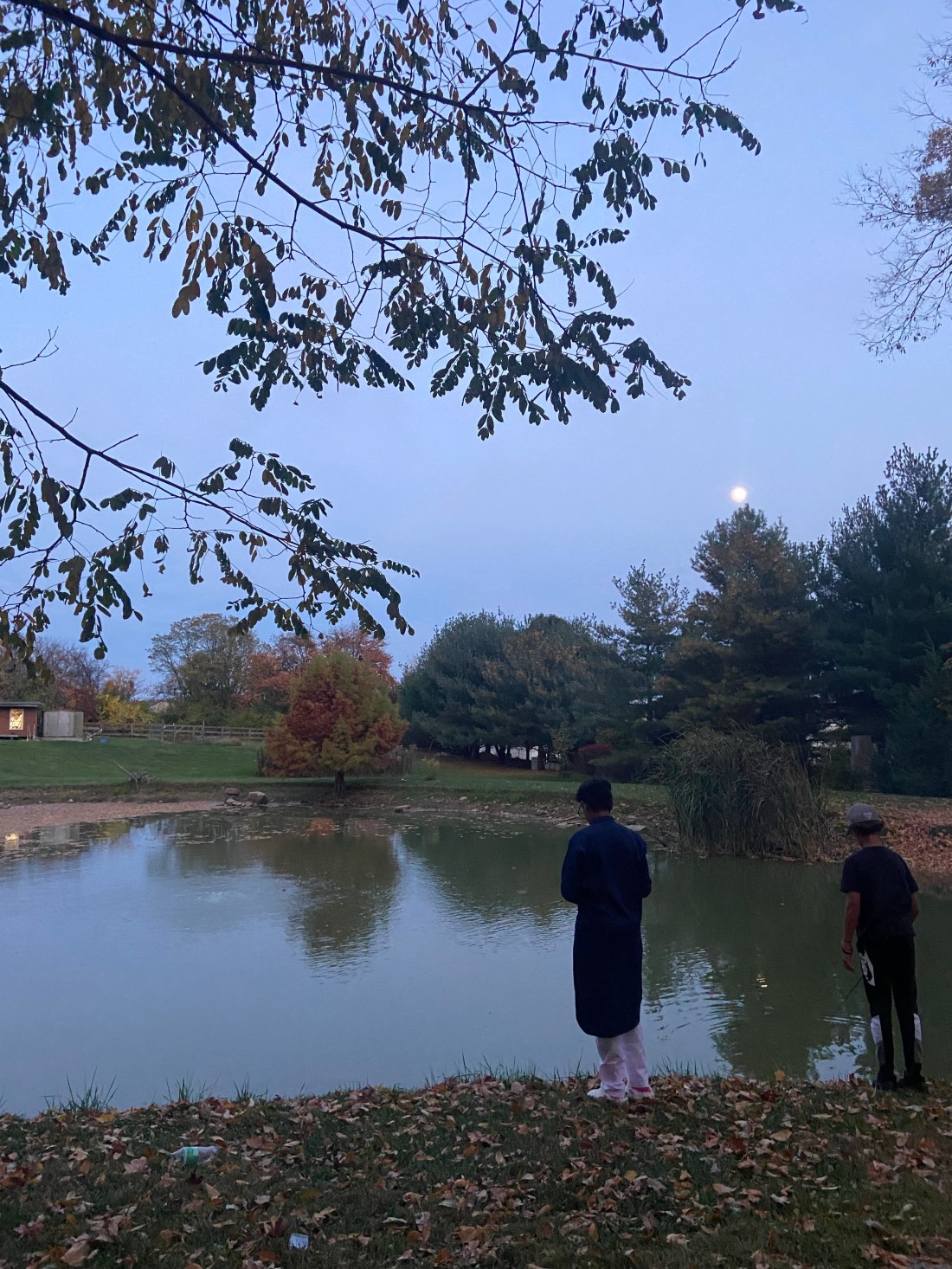
Meditation is a process of wholeness, not a part. When one becomes aware of all activities- who you are speaking to, how you are speaking to your wife, child, boss- in every action, like walking, writing, eating, just ‘ be aware’ of this action. Then you will see the beauty of life and the stillness of mind; you can do anything correctly, such as driving. Because then our mind does not chatter; it will automatically become wise and intelligent. Now the mind will cool in society and in every field.
Constant natural meditation, like the steady flow of ghee or a stream of water, is better than intermittent o contemplation.

Ritualistic worship, chanting, and meditation (one-pointedness) are done with the body, voice, and mind; they excel each other in the ascending order.
Worship of God in his eight- fold form, understanding that he is so manifest ,is proper worship of him.
Uttering the sacred word, either in a loud or low tone, is preferable to chants in praise of the Supreme. Mental contemplation is superior to both: Maharishi Ramana.